

Packaging across Australia and New Zealand is getting thinner. Not because manufacturers have cut corners, but because reducing substrate weight is one of the most direct and measurable ways to lower material consumption, reduce shipping emissions, and move closer to sustainability targets. A pouch that was once 80 microns is now 60. A corrugated shipper that carried a generous flute profile has been redesigned with a lighter board grade. Recycled-content materials have replaced virgin substrates on lines that were never set up to handle them.
The intent is right. But the production consequences can be significant, and they tend to show up first in the coding and labelling booth.
At ALDUS™ Tronics, we work with manufacturers across Australia and New Zealand every week who are navigating exactly this challenge. The packaging has changed. The line has not been updated to match. And somewhere between the sustainability brief and the production floor, reject rates have started climbing and throughput has started slipping.
This article explains why that happens, what can be done about it, and how the right technical partner makes the difference between a smooth transition and an expensive one.
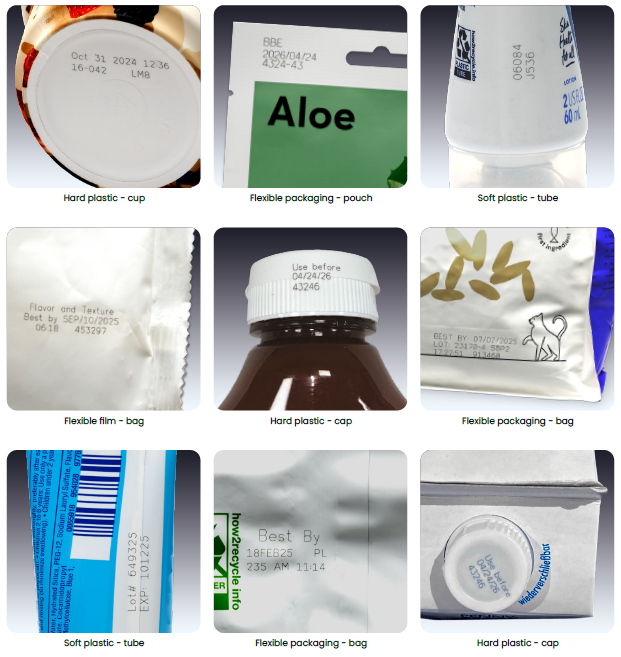
The shift to sustainable substrates is not discretionary for most manufacturers. According to the Australian Packaging Covenant Organisation (APCO), 86% of packaging in Australia is currently reusable, recyclable, or compostable against a target of 100%, while only 20% of plastic packaging is being recycled or composted against a target of 70%. Those gaps represent significant work still to be done, and they are translating directly into material reformulations, substrate changes, and packaging redesigns across the supply chain.
For manufacturers in food, beverage, pet food, personal care, and household goods, the pressure is coming from multiple directions at once: regulatory frameworks, retail sustainability requirements, and consumer expectation. The result is that packaging decisions which once happened over years are now being compressed into months.
The production line rarely gets the same urgency.
Conventional coding and labelling systems were configured and optimised around the materials that were standard at the time of installation. When those materials change, the variables that govern print quality, adhesion, and drying also change, often in ways that are not immediately obvious until production is underway.
The four challenges that appear most consistently are these.
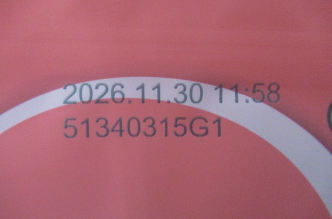
One of the clearest examples of this challenge came from an Australian food manufacturer who approached ALDUS™ Tronics with a specific brief. They wanted to reduce the gauge of their flexible film packaging as part of a broader sustainability program. The thinner film used less material, generated less waste, and aligned with their group-level packaging reduction targets. On paper, it was a straightforward win.
On the production line, it was a different story.
Their existing coding system relied on a technology that applied sufficient energy to the film surface to produce a legible, durable code. At the original film thickness, this worked reliably. At the reduced gauge, the same energy that previously produced a clean code was now at risk of compromising the structural integrity of the film itself. A weakened seal point is not an acceptable outcome in food packaging, where integrity is directly tied to product safety and shelf life.
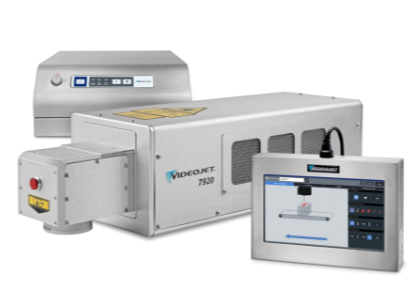
The ALDUS™ Tronics technical team assessed the application in detail and recommended a UV laser coding solution. UV laser technology operates at a wavelength and energy level that produces a high-contrast, permanent code on the film surface without the thermal penetration that was creating risk on the thinner substrate. The code quality met all regulatory and retailer requirements. The film integrity was preserved. And the line ran at full speed without any modification to the packaging design or the downstream process.
The manufacturer achieved their sustainability goal without compromise. The substrate got thinner. The coding got better.
This is the central point that gets missed in many packaging transition projects. There is rarely a single correct answer for coding on sustainable materials. The right solution depends on the substrate, the line speed, the code requirement, the environment, and the downstream handling of the product. That is why a broad technology capability matters as much as product knowledge.
Here is how the most common challenges map to proven approaches:

Ink adhesion on porous or uncoated recycled surfaces
Faint, smudged, or non-compliant codes
Ink type review, print head settings adjustment, or switch to laser coding
Thermal or mechanical sensitivity on thinner substrates
Film distortion, perforation, or weakened seals
UV laser coding, which applies no contact and minimal thermal load
Extended ink drying or cure time
Reduced throughput and downstream smearing
UV-curable ink systems or line setup optimisation
Inconsistent material surface properties across batches
Variable print quality and elevated rework
Substrate profiling and parameter testing before full rollout
Label adhesive failure on recycled or uncoated board
Label lift, bubbling, or loss
Label material and adhesive matching to substrate type
In most cases, equipment replacement is not required. The answer often lies in configuration, ink selection, or a targeted technology upgrade that preserves your existing line investment.
There are a number of coding and labelling suppliers operating in Australia and New Zealand. What separates ALDUS™ Tronics is not just the breadth of technology we offer, but what stands behind it.
ALDUS™ Tronics has been a Videojet authorised distributor in Australia for over 20 years, and is the exclusive distributor for Videojet in New Zealand. Our technical team is trained directly by Videojet, which means the knowledge we bring to your line reflects the same engineering depth that sits behind the equipment itself. When we assess a substrate compatibility challenge, we are not reading from a generic troubleshooting guide. We are drawing on more than two decades of application experience across food, beverage, pharmaceutical, pet food, personal care, and industrial manufacturing environments in this region.
That local presence matters more than it might initially appear. When something changes on your line, whether that is a new substrate arriving from a supplier, a speed increase, or an unexpected spike in rejects, you need a team that can be with you quickly. Not a global support queue. Not a remote diagnosis from a different time zone. ALDUS™ Tronics provides local technical support, local parts inventory, and local people who understand the specific regulatory and operational context of manufacturing in Australia and New Zealand.
Our technology range spans continuous inkjet, thermal inkjet, UV and CO2 laser coding, thermal transfer overprinting, and print and apply labelling. That breadth means we can recommend the right solution for your specific combination of material, environment, and performance requirement rather than fitting your needs around a limited catalogue.
We are not a transactional supplier. We are a long-term production partner. The food manufacturer described above did not just get a piece of equipment from us. They got an assessment, a recommendation, an installation, and ongoing support from a team that now understands their line and their materials. That relationship does not end at commissioning.
Manufacturers that bring their coding and labelling partner into the conversation at the packaging design stage consistently experience fewer surprises when they reach production. The ones who treat packaging material changes as a procurement decision and inform their coding supplier after the fact are the ones who tend to absorb the cost of an unplanned transition.
Having a technical partner who understands your line, your materials, and your sustainability targets, and who has the local presence and manufacturer-level training to support you as both evolve, is not a nice-to-have. It is a practical operational advantage.
Get in touch with ALDUS™ Tronics to discuss your sustainable packaging requirements and find out how our team can support your transition without compromising your throughput.
.svg)

